Monday, August 3, 2015

The 5 Types of Content That Attract the Most Backlinks

content marketing

In most cases, how you present your content is just as important as what you write about.

Depending on how you structure your articles, what you include in them, and what media format you use to present them, your results will be different.

Some posts are great for spreading through social media, but they may not attract many backlinks. Others create a ton of engagement, but not much else.

Some can even help you begin a valuable relationship with an influencer.

My point is: All content you produce should be with an end-goal in mind. Know what you’re trying to accomplish.

One of the most common and important goals of content is to attract links. Links are still a major part of SEO and probably will be for the foreseeable future.

Backlinks to a post not only help that specific post rank better in search engines but they also help all other posts on your site. Get enough quality links, and you’ll be getting tens of thousands of organic search engine visitors a month to your site.

That’s what I have for you today: a guide to the 5 best types of content that can attract not only a good quantity of links, but also high quality links. 

1. People have and will always love list posts

I write a ton of list posts and find they work especially well as guest posts.

Just look at some of the posts I published on NeilPatel.com during June:

  • 21 Resources For Mastering Online Marketing
  • 15 Quick Tips to Convert Visitors Into Email Subscribers
  • 5 Scientifically Proven Techniques to Attract a Loyal Audience
  • 5 Copywriting Strategies That Will Improve Your Conversion Rate by 113%

But it’s not just me who loves them.

In an in-depth study of over 220,000 articles, Fractl and BuzzStream found that list posts were the most shareable.

These results confirmed an earlier analysis by Buzzsumo and Okdork of 100 million articles. List posts were only beat by infographics:

image08

But what’s really interesting is that the popularity changes drastically by month:

image11

The most important takeaway is that list posts are remarkably consistent, which will help you get more steady results from producing them. It makes it much easier to determine an accurate return on investment (ROI).

For one more example of list posts being a great type of content, look at the top posts published on Boost Blog Traffic:

image09

That’s right, three out of four are list posts. Also note that they are long lists, and if you visited the articles, they are also really in-depth.

But I told you something at the start of this post: we’re looking for content that can produce links.

It turns out, people also like to link to list posts:

image06

Other than its homepage, both Boost Blog Traffic’s top two posts (in terms of referring domains) are lists posts.

Why people love list posts: Despite the fact that a lot of people complain about having to read “just another list post,” list posts remain one of the most popular content types. That’s because lists have a few key things going for them:

  • they make a specific promise: a reader knows how much attention they’ll have to spend on the article
  • they are scannable: almost all readers scan articles. Since each list item is usually a subheader, it’s easy to get the gist of an article quickly.
  • they invoke curiosity: it’s almost like a test. Can you guess the X ways to do something? Sure, you probably know one or two off the top of your head, but that leaves a big curiosity gap that you want to fill.

A final reason why list posts are great for you as a content creator is that they are among the cheapest to make. As you’ll see with some of the other content types, it’s not uncommon to spend thousands of dollars to create content that attracts a ton of links. It’s rare for a list post to cost much more than a few hundred (in expensive cases).

Here’s how you make a list post…

Step 1 – Pick a topic where more is better: The potential obstacle that you may run into is that most bloggers write list posts on a regular basis, whether on purpose or by accident.

What this means is that there is a ton of competition when it comes to list posts. Search for just about any topic, and you’ll find at least a couple of lists posts.

In order to get someone to link to you, you need to produce content that is worthy of linking. If you’re just producing the same lists as everyone else, it’s going to be a tough sell to get someone to link to you.

The solution? Go bigger, go better.

What sounds more impressive to you:

“6 Low-Calorie Snacks That Are Great for a Diet”

OR

“The Complete List: 56 Low-Calorie Snacks That Are Great for a Diet”

Without even seeing each article, you can tell the second option is going to be more impressive.

What you want to do is find a topic in your niche where more is better.

Some topics do not work well for list posts. No one is interested in “60 Ways to Use Scissors,” or “25 Ways to Use a Spoon.”

In general, you want to find topics where list posts are already doing well. If you search a phrase or keyword and see three or four other list posts in the top few results, you’re onto something.

image04

Ideally, you found shorter posts. Looking at the results above, I can tell it’s going to be harder to make a piece of content that is way better than any of the long lists. But it is still possible if you really want to target that keyword.

In addition to making a post longer, you can also make it:

  • more detailed
  • more visual/usable
  • more accessible (maybe a printable or downloadable version)

You’ll need to look at each of the top ranking results and see what they are missing. Some things will be obvious, but you can also look at the comments of each article for hints about what is missing or what can be improved.

image16

Really, you can pick any keyword or phrase that you’d like to target and check if it’s a good candidate. If you just want to find the keywords that work best with list posts, use the Adword’s Keyword Planner to look for the following:

  • best [niche]
  • [niche] tips
  • ways to [niche]

For example:

image03

Just from that search, you could create:

  • The X Best Nutrition Books
  • The X Best Nutrition Apps
  • The X Best Nutrition Bars

And you could replace “nutrition” with other niche-related keywords to get more ideas.

Step 2 – Write your list, and format it: Creating the post will take up most of your time. First, decide how you’re going to improve on what’s out there.

Remember, your list doesn’t necessarily have to be longer. If you can make it more valuable in other ways, do that.

Research has shown that lists with 10 items receive the most social shares by far. In fact, they get 4 times as many shares as the next closest list number – 23. Other top performing results were 16 and 24.

That being said, there isn’t a great sample size for longer posts, and from past experience, we know they also do well.

Here’s how I suggest you lay out your posts:

  • Introduction
  • Your list
  • Conclusion

Use your introduction to explain to your readers why this topic is important and how the list can help them. Use the conclusion to highlight the best items on the list and to engage your readers.

I see too many writers simply throwing a list at their readers and then getting surprised when their results are poor. It should be just like a conversation: you greet someone, and you say your goodbyes at the end.

2. Go beyond expectations with guides

I honestly don’t think there is another marketer who has invested as much time and effort into creating “definitive” guides as I have.

Take a look at the Quick Sprout sidebar if you don’t believe me:

image01

Each of these guides are tens of thousands of words long and have a customized design that helps them standout from other guides.

When you write one of these guides, your goal is to create an “ultimate guide.” If the topic you’ve written about comes up in a discussion in a forum or on social media, you want people to be able to link to your guide and say “this is all you need.”

If you do that well, you will attract a ton of links and, subsequently, traffic:

image15

Before you get too excited, I need to give you a quick reality check.

Creating a guide of this level is not easy.

It will either take you several (possibly over a hundred) hours to create or it will cost you thousands dollars to have someone else create it for you. If you cut corners, you won’t get the same type of results as shown above.

With a long-term perspective, I think the ROI on these guides is fantastic. It works out to under $20 per link, and the guides drive a ton of traffic and considerably increase the value of your personal brand.

You instantly position yourself as a leader in your niche (e.g., SEO) by creating a guide like this. Create more (like I have), and you’ll be considered a leader in a broader subject (e.g., marketing).

If you’re considering making this investment, here’s what you’ll need to do…

Step 1 – Find a topic and define the scope: The topic and scope will help determine how expensive the guide will be to create.

Remember, this is an “ultimate” guide. It needs to contain everything on your chosen topic.

If you pick a really wide topic, such as “The Ultimate Guide to Marketing,” you would have to write hundreds of thousands of words.

It’s better to err on the narrow side (e.g., “The Ultimate Guide to Structured Data”) and have a guide that’s only 5,000-10,000 words but covers everything about the topic rather than go too broad and have to leave things out or send your costs through the roof.

Note that you can limit your scope in other ways as well. For example, I have created a guide for “online marketing,” but I wrote it for beginners. That way, I can cover everything that a beginner needs to know without covering everything that an expert would need to know.

Step 2 – Lay out the guide: If you’re going to hire a writer, now is the time. I recommend posting a description of the job on a job board such as ProBlogger.

Yes, it will cost money to post the job. You will also have to pay a decent amount for the writing.

This is because you can’t just hire an average writer—you need a great writer. Everything about your guide needs to be top-notch for it to work.

If you have a bit of a reputation in the niche, you might also be able to hire an up-and-coming blogger in your niche whose work you like.

While I contribute to my guides and help lay them out, most of the writing is done by a collaborator. For example, I co-wrote my guide to content marketing with Kathryn Aragon, my editor at Crazy Egg:

image13

Once you know who’s going to write the guide, it’s time to lay it out.

Create an outline of the guide for all the main topics you’ll cover—similar to a table of contents.

image14

Then, create an outline for each of these sections. Treat them as separate pages/posts.

Once you’ve done so, write the individual articles as you usually would. Just keep in mind that quality comes first.

Step 3 – Find a designer: Most writers and marketers might be able to put together a simple custom image when needed, but for a guide like this, you need a whole different skill set.

You’ll need custom images, fonts, backgrounds, plus an experienced eye for laying it all out in the best way:

image05

Again, you can’t cheap out here, or the quality of your guide will suffer.

I personally like Dribbble to find a designer, but you can also find good ones on Upwork and Freelancer if you don’t mind wading through the low-quality designers.

Step 4 – Promote it (easy if you did the previous steps right): If you have a truly great guide, it’ll take only a bit of promotion to get it out there and spread awareness.

A good place to start is Reddit. If you’re not familiar with Reddit, it’s a massive site where users can vote on links to content. Since your guide is so awesome, if you post it in the right community, it’ll get a ton of upvotes and traffic. Before you try, though, learn how to use Reddit the right way.

The next thing you should do is promote your content in a similar way to the Skyscraper Technique. There will be other guides to your topic, but yours will be the best by far. Email anyone who has linked to inferior guides, and tell them you have one that is way better.

Finally, email blog owners who have an audience who would be interested in your guide. For a guide to SEO, don’t email other SEO bloggers—they won’t be very receptive. Email bloggers who write about building online businesses, e-commerce sites, niche sites, etc. These aren’t direct competitors, and they’ll likely love your guide and link to it in the future.

3. Make a work of web art (aka infographics)

No, infographics aren’t what they used to be, but they can still attract a ton of great links.

Infographics are currently the most viral type of content you can produce. When they were a novelty, they used to go viral fast because people were fascinated by infographics. Today, you’ll have to produce a higher quality one for it to get traction.

Recently, I analyzed the results of my infographics. Although the results of my newer infographics (in the last two years) weren’t even close to the two years prior, they still drove 21,582 visitors and 371 backlinks from 34 unique domains on average.

Not a bad return.

Until that diminishes a lot further, I’ll continue producing infographics on a regular basis.

Step 1 – Pick the right topic: Infographics are great because they can communicate almost any type of message. However, I’ve found that infographics that are based on data or those that break down a topic step-by-step work best.

image10

Researching the data you need can take quite a while, but it’s worth it.

Step 2 – Find a great designer: You can go about this in a few ways. You can either hire a designer who specializes in infographics (from Dribbble or similar), or you can hire an agency.

Visual.ly is the most popular agency when it comes to infographics, but it’s not cheap. Expect to spend about $1,000 on average for an infographic.

You can usually save money with your own designer, but you may have to do a lot of the legwork yourself.

Additionally, consider if you’d like to take your infographic to the next level by making it a “gifographic.”

Gifographics are just like “gifs” you see all over the Internet. They combine animations with infographics. These will attract extra links and social shares but cost more to make. Here’s an example of one.

Step 3 – Promote it: Unless you have an audience the size of mine at Quick Sprout, your infographic won’t be linked to unless you get it in front of the right people.

Refer to the section on promotion in this guide to creating a popular infographic.

4. Make an influencer look amazing

What is a link from me worth? Or any other influencer in your niche?

Although it’s just a single link, it’s an extremely high quality one. In addition, it would get you exposure to thousands of people in your niche, many of whom may link to you in forum or social media discussions or blogs of their own. That one link will likely turn into several more.

What if you could force an influencer to link to you?

You can—you just need to make them look amazing.

Here’s the plan…

Step 1 – Pick an influencer to target: There’s no shortage of popular bloggers that give out advice. Your first job is to pick 5-10 influencers you’d love to connect with and get a link from.

Order them from most to least favorite. With this strategy, you can only really target one or two influencers at a time, but you can repeat this strategy as many times in the future as you want.

Step 2 – Follow his/her advice to the letter: When you reach a certain level of popularity, your blog becomes an echo chamber. You’ll get a ton of comments and emails saying “great post, it was really helpful,” but you never know if your work is actually helping your readers.

Every once in a while, an email or comment comes along that puts a smile on your face. Not only did this person apply your advice, but he or she got great results as well.

This is what you’re going to do. Pick one or two major pieces of advice, apply them, and document everything from start to finish. If possible, put any techniques they have created into practice.

This advice can be from a blog, but it’s even better if it’s from a product. If you can share a success story from a product you bought, the influencer can also showcase your results as a testimonial in addition to a case study.

Step 3 – Tell them about your results: The last part of this strategy is to get in touch with the influencer. All you really need to do is tell them your results in a short email (or comment on a relevant page). In most cases, they’ll do the work from there.

Here’s a template you can use:

Subject: I just wanted to say thanks

Hi [name],

I read your article about [topic] a while back and decided it was about time I took action on your advice.

So, I [briefly describe what you did].

Now, a few weeks later, I’ve seen the following results:

  • result #1
  • result #2
  • result #3

It wouldn’t have been possible without your help, so I just wanted to say thanks.

Best regards,

[your name]

Step 4 – Get great links: If you were able to show that you got great results by following your target influencer’s advice, most of the time, they’ll ask for more details. Give them the details, and suggest helping them write a case study if they’re interested.

Additionally, you can write a post about your results on your own blog and talk up your influencer there. Then, email them a link to the post. Although you might not get a link right away, the next time your influencer wants to highlight a success story in a post, they’ll likely link to you. In fact, it may happen several times in the future.

When done right, this strategy will lead to links over 50% of the time. Just make sure you follow the influencer’s advice as intended and get a great result before sharing.

Examples of this strategy in action: Just to help clarify things a bit, I found two cases of this strategy working perfectly.

First, Jimmy Daly put Brian Dean’s Skyscraper Technique into action. After he got some impressive results, he contacted Brian, and it led to this case study.

image07

Not only did he get multiple links to his site, Jimmy also got his company highlighted in the article, which likely led to a lot more business.

The second example involves Ramit Sethi as the target influencer. Ramit is one of the most popular bloggers in any niche, and this technique can still work to get a link from him.

Chris and Kerry documented the results of applying a lot of Ramit’s advice, and once it was impressive enough, they were featured in a case study, which included a link to their website.

image00

The bigger the influencer you target, the higher quality the link will be, but the more work will be needed to impress the influencer.

Alternatively, targeting a slightly less popular blogger can be a good thing because they’re more likely to link to you multiple times in the future as they don’t have a ton of other successful examples.

5. Show your community that you care

Your community is filled with influencers, small bloggers, readers, and hobbyists interested in your niche.

If you want to attract a ton of attention and links, you need to create something that all those people care about.

Step 1 – Find a complex problem that’s begging for an answer: By far the most common problem for bloggers and enthusiasts is that there’s not enough support for their passion.

They want to introduce others to their interest without looking stupid or weird.

In the marketing niche, for example, everyone is always looking for statistics so that they can back up their advice.

If you can find a particular aspect of marketing where statistics are lacking, you could be the one to create them.

Even large companies such as HubSpot continually invest in analyzing data to produce useful statistics for their communities because it works. Good data attracts a ton of links.

Heck, I’ve already linked to two in-depth studies earlier. First, the in-depth study on shareable content by Fractl and BuzzStream. Then, the analysis by Buzzsumo and Okdork of 100 million articles.

And I’m not the only one to link to them. The first article has links from 90 unique domains. And the Okdork analysis has over 460 linking root domains and over 23,000 backlinks. That’s from one article!

image02

Step 2 – Invest time and resources: The reason that content like this gets so many links is because it’s really valuable. It takes a lot of time and effort to create.

Figure out what data is most interesting to your community and find a way to make it happen. You may have to survey experts one-by-one, analyze a ton of data (great in online niches), or conduct in-person product tests.

You may not have the skills to do the studies such as the ones featured above on your own. In that case, you can try to reach out to a collaborator that might have access to the data but hasn’t published it.

That’s what Noah (Okdork) did with his analysis. He saw that Buzzsumo had collected data from millions of domains and got in touch with them to get access to the research. Buzzsumo gets a lot of credit in the content, and Noah gets his awesome link-attracting article.

Step 3 – Pick out the most interesting data and present it: After you’ve put in a ton of work, it’s tempting just to publish it all, effectively saying “I’ve done enough, here it is.”

But if you really want great results, you have to keep going until your work is done.

Now, you need to present your data in an attractive way. Create graphs and charts of the most interesting data that gets your point across. This will help spread it on social media. For example, the post on Okdork had attractive graphs with embed codes for all the main points:

image12

If you really want to go the extra mile (and I encourage it), think about creating an infographic from your data. The big benefit from this is that your infographic should get a lot of attention because it is all original data.

Once you’ve published your content, it’s pretty easy to promote it. Essentially, you can email influencers and go to forum and Reddit communities and say something along the lines of “I spent X hours creating Y for people in this community like you. Please take a look.”

Most will take a look, and if you’ve chosen a good topic, they will love it and spread it for you.

Conclusion

Why did I give you five types of content that attract links? Why not just one?

Because not all content types will produce the same results in every niche.

I recommend that you try each type of content mentioned here two to three times over the next few months, then track how much you spent to create it and what results you were able to achieve.

Based on that, you can focus more on the most effective types of content for your website.

Remember that great content will continue to attract links over time past your initial promotional efforts—as long as your site is growing.

If you can publish great content on a consistent basis (for at least six to 12 months), you’ll likely see your results explode. Don’t give up if you have one or two pieces of content that don’t meet your expectations.

Before you plan how you’ll use these types of content, tell me in a comment below: Which types of content have you had the most success with in the past, and which types of content will you try in the future?

7 Steps to Optimize Your Blog Posts Like a Pro

7 Steps to Optimize Your Blog Posts Like a Pro written by Guest Post read more at Small Business Marketing Blog from Duct Tape Marketing

I’m a content manager; my background is in public relations with a little bit of marketing strategy and graphic design. I’m sitting here thinking, “What do I know about online optimization!?” I’m not a web design guru; I’m no software engineer or web developer.

And then it occurs to me, if I can get the basics done, like keyword research, I can easily optimize those blog posts I write by using a simple tool that is built into our WordPress dashboard, Yoast. I’m sure there are other SEO plugins that do similar things, but Yoast is the one I know so Yoast is the way it goes.

Now that you know my secret tool, here is a step-by-step guide to optimizing your blog posts:

Step 1:

Identify the keywords you’d like to optimize for. This process starts with a basic idea of what your organization (or your client’s) covers, and then you can dig down into the specific relevant phrases that people are using to search for your organization’s product or services.

Step 2:

Pick a focus. Don’t try to optimize one post for all of the keywords you’ve identified. Pick a few that correlate and make sense and then delegate the rest into groups of similar terms as well (those can be for your next post, and then the one after that.)

Step 3:

Write your post. Try to use the exact phrases that you’ve identified in your keyword search, without sounding forced. You don’t want optimizing your blog post to make it unreadable. For example, did you notice I have used a version of the word “optimize” four times already?

Step 4:

Proofread. This isn’t really necessary to optimize your blog post, but a personal preference that you ensure what you’re publishing makes sense. (Thanks!)

Step 5:

Tell the web what your post is! This is where Yoast comes in.

  1. Enter your focus keyword into the spot that says “Focus keyword.” This is the specific keyword or phrase that you used the most throughout the post.
  2. Write your SEO title. You might have an awesomely clever title, but if it doesn’t say what your post is about, your SEO won’t be as strong for your blog post. Use this space to write a title that is enticing and clear, and preferably that includes the focus keyword. This is what will show up in search results when someone does an online search for your keyword.
  3. Develop the meta description. This should have your focus keyword in it, and be in complete sentences. Typically, I like to copy a sentence or two that includes my keyword straight from the post. This is what will show up under your SEO title to give online searchers more information about your post. It should be short, sweet and to the point.

Step 6:

yoast seoMake sure you get the “green light” on your SEO check provided by Yoast. If you don’t, go back and identify the places that can be improved.
The plug-in will show you if your keyword is being used in each of these places for maximum optimization:

  • Article heading
  • Page Title
  • Page URL
  • Content
  • Meta Description

If you’ve included your keyword in all of these places, you’ll get an SEO green light.

Green light means go!

Step 7:

Publish and share!

Bonus:

Here are some bonus tips to ensure your blog post is optimized to its max potential:

  • Use your target keyword more than once.
  • Incorporate your target keyword into your URL.
  • Include an image that has your target keyword in the “alt text.”
  • Pin that image as the “featured image.”
  • Link to other blog posts on your site and/or link to other influencers’ content (they will get a pingback to notify them that their content is being shared).
  • Apply relevant tags and categories to your post.
  • If you can, use your target keyword in a heading somewhere in your post.

So I’m not an SEO expert or web development guru, but with a little research and help from a plug-in, I can optimize my blog posts with the big guns. Do you have any other tips or best practices to share for optimizing posts?

IMG_2750Kala Linck is the Community and Content Manager at Duct Tape Marketing. You can find her blogging her travels and tweeting about marketing, coffee, and cats @tadasunshine.

Creating Product Names to Maximize Digital Exposure

While generating the maximum exposure isn’t always the first thing your product development team thinks about when developing a product, it falls to marketers to inform our company’s prospective customers about this new and exciting product.

Unfortunately, rarely is the marketing team able to lead the product naming conversation; thus, by the time the product is ready to go to market, we are often handicapped in our options.  Below you will find three guiding principles for product naming that enable maximum exposure once your product hits the market.

After all the hard work of developing a product, why name it in a way that reduces your ability to market?

Following the guidelines below when choosing a product name gives you the best chance to achieve the maximum amount of exposure while expending the least amount of resources.

Each rule below can be broken or ignored if necessary, but doing so will mean increased marketing costs over the life of the product.


Principle #1: Don’t allow search engines to guess

While massive strides have recently been made by modern search engine algorithms in their ability to determine the user intent behind a given search query, they are not perfect. In order for your product to achieve the maximum level of exposure, your greatest weapon is to remove as much guesswork from the equation as possible.


Principle #2: Don’t create product names that resemble a mistake

Avoid misspellings

Search engines automatically make adjustments for queries they deem to contain spelling errors.

Google has even gone so far as to automatically show users the results for what the algorithm assumed they were intending to spell. This greatly reduces exposure of your product until your misspelling is adjusted for in the algorithm.

Examples:  Sinc, Sync, Reli, Mi, EZ, Lazer, Xport

In the past I ran the Search Marketing Program for a large global brand whose product name included a clever misspelling. Despite our efforts to promote the brand — including the expending of considerable resources — the top traffic driving keyword used by customers to access our 30+ global websites was the correct spelling.

Avoid Excessive Capitalization or Punctuation

In addition to the potential for search algorithms to categorize these types of names as misspellings, you may find that you’re prevented from fully advertising due to search engine regulations.

For instance, should you want to engage in pay per click (PPC) advertising tactics on Google, the search engine with the largest global market share, you may find your name is in opposition to their Editorial & Professional Requirements.

Examples:  LLI, BIG!, ASPIRE, D-TRONIC, EZ+, FLOWERS, A.C.M.E.

Avoid product names that could be considered web code or incorrect parts of web code

In addition to search engines, even modern web browsers are now making automatic adjustments for these common mistakes.

Examples:  com, Log, Meta, Bold, Link, Flash, Zip, Dash

Avoid using search operators

Search engine algorithms can become confused when a user performs a query which includes search operators such as certain punctuation, symbols and code. The query may look incomplete if these operators are included.

Examples:  +, –, OR, $, @ and ”

While the examples above are all less common, over the past few years the #, or hashtag,  now signals to many algorithms that a user is looking for trending topics. A full list of the search operators for Google can be found here. Fair warning — these do change over time.

Avoid using stop words

Stop words are words that search engines typically do not consider when determining results of a search query. There is no definitive confirmation of every stop word that any specific major search engine uses, as that’s part of their secret sauce, but as a general guide they are good to ignore when naming your products.  If a search engine doesn’t even consider your name as part of the query, you’re not getting maximum exposure.

Example: all single letters are considered stop words — A, Z, X, P, M

Example: all phonetically spelled numbers are considered stop words (six, nine, one hundred)


Principle #3: Don’t create a product name that forces an automated system to choose between you and a location.

Names without a modifier that correspond to a city, state, region, territory, country or continent will force search engine algorithms to decipher if the intent was to look for a product or find out more about a location. In today’s hyper mobile environment, which one do you think will win?

Examples: Paris, Berlin, London, Champaign, NorthWest, Scandinavia, Burgundy, Catalonia

Avoid using animal names, especially ones which that correspond to sports teams.

Examples: Bears, Lions or Hawk


Principle #4: Create a unique product name that maximizes your potential to be matched for any and all related search queries

Avoid using common words or broad categories

Using a common word ensures that the first few results returned when a prospective customer searches for your product will not belong to you.

These types of searches typically return definitions from multiple sources and other enhanced search results like images, videos and news. While these results reduce your visibility on desktop searches by pushing you lower, it can completely banish you on mobile devices due to a decreased number of available slots. When it comes to promotion, the broader the common word, the more competition it has and the more expensive it will be to compete on.

Examples:  Orange, Laser, Zen, Bridge, Bucket, Pale

Avoid using two and three letter words, acronyms or abbreviations

This is the most cost prohibitive rule to break as there are multiple overlapping uses for two and three letter search terms.

Stock symbols (CAT) and trade associations (ADA, AMA) are common results for three letter search queries.  Acronyms and abbreviations are often used in email, messenger programs, SMS, Twitter and other types of communications that require shortened lengths. These meanings can change quickly over time.

Examples:   NEO, NOW, ACT, AIM, ATM

Examples:  iNi (I’m not interested), AKA (also known as), AFK (away from Keyboard), BG (Big Grin), JIC (Just in Case)

While the list above may instill a sense of hopelessness, take heart because all is not lost. There are several good options to name your product.

  • Do create product names that are verbs. Verbs are treated differently than nouns in search queries and are therefore much easier to search for.

Examples:  Aspire, Inspire, Quick

  • Do create product names that contain four or more letters. Essentially, the more clues you give the search engine algorithms, the better. Using four or more letters will help you completely avoid all of the issues associated with two to three letter names.

Examples:   Verve, Pulse, Vibe, Pure

  • Do create product names that are multi-word combos. Multi-word combos contain two signals that help search engines algorithms understand that the search is product related and not informational. Successful products that use this tactic include “QuickTime,” “TurboTax” and “Wet Jet.”

One special note here: if you are creating a multi-word combo, do not hyphenate or otherwise punctuate the combination. This will result in the product name not following several of the previously mentioned rules.

Examples:   “Easy Step,” “Quick Test,” “Easy Edge” and “Quick Check”

You might also like

The Psychology of the Searcher: How knowing how our prospects search can help us to optimize our campaigns

Marketing Research Chart: SEO most effective tactic for lead gen, but also among the most difficult [From MarketingSherpa]

Marketing Research Chart: To improve SEO effectiveness, content is king [From MarketingSherpa]

5 Ways to Bring Your Writing to Life on Stage

Most content marketing begins its life in written form, whether that is its final form or not. If your job is to write blog posts or ebooks, your work appears as a collection of words. Even if you are creating visual content or videos, this content begins with words. But how do you bring those words to life and present them to an audience?

The days are gone of standing at a podium and reading a speech. Some speakers still do this, but if you would really like to bring your writing to life, consider the following suggestions below.

1. Focus on Telling a Compelling Story

Blog posts, novels and conference presentations succeed when they tell compelling stories. If you don’t have anything interesting to say, then it is hard to bring that story to life. Let’s make the assumption that you have a good story to tell, meaning there’s drama or tension or fantastic marketing results, so you need to tell it in a way that keeps the audience interested. Set your audience’s expectations early, so they know what is coming, but create suspense so even if they know what is going to happen, they don't know how you (and they) get there.

2. Share Visuals, Not Words

We have all seen too many slides with bullet points. We never need to see another one. Want to bring your story to life? Fill each slide with one big picture. Add a caption or a title if you want to. Want people to pay attention to what you are saying? Don’t give them a slide with 17 bullet points on it. They will read it instead of listening to you. Want people to remember what you said? Show them pictures instead of words. Most people are more likely to remember the pictures and associated ideas than they are to remember words on a slide.

3. Identify with the Audience

You are not speaking to a room full of generic people. Target your presentation just like you would a successful marketing campaign. Make sure you create a talk that speaks to the crowd's concerns and interests. If you were giving a presentation to room full of marketing practitioners or a room full of CMOs, you would focus on different takeaways. And very different details. Be sure to know the make-up of your audience so you can tell the right story.

4. Know Your Material

The best way to give a great presentation is to know your material. That doesn’t mean write out a 60 minute speech and memorize it so you can recite it perfectly, word for word. It means being completely familiar with the ideas and examples behind your story so that you can tell it smoothly without memorization. If all you have done is memorize your words, this will be clear to the audience. It will feel like you are just reading to them instead of talking to them.

5. Watch Other Speakers

Many of us go to conferences and bemoan the quality of the speakers. We watch their body language and scowl. If a speaker crosses his arms or keeps his hands in his pockets, it creates distance between us. Even more than is created by being up on stage. But if they are gesturing naturally, moving around the stage and making eye contact with the audience, we pay more attention. Some of the best speakers give TED talks, many of which are online. Pick a few that are about topics you are interested in and watch them. Pay attention to how they speak, how they stand, how they move and what their slides look like. It is bound to give you some ideas how to tell your story.

Bonus: Practice!

You made a bunch of pretty slides, wrote down some notes about your talk and even thought about the clothes you will wear. You also need to practice how some of these words will come out of your month. How will you start? What about transitions? Does your talk fill the allotted time? How will you end? Again, this doesn’t mean write out a speech and memorize it, but it does mean that you should run through what you are going to say. No matter how many times you have been on stage, unless you have practiced a new talk, at least a little bit, it will be rough around the edges. Respect your audience and practice. They are spending their time (and maybe money) to listen to you. Make it worth it by really bringing your story to life.

If you have a compelling marketing story to tell, submit a speaking proposal to Modern Marketing Experience in London, which will be held 17-19 November 2015. Proposal deadline is 17 August 2015. Please note that this is a European marketing event and preference will given to European marketers.

Learn more about Modern Marketing Experience here.

Marketing Day: Facebook News Feed Updates, Email Tips & Placed’s New Revenue Tracker

Here's our recap of what happened in online marketing today, as reported on Marketing Land and other places across the web.

Please visit Marketing Land for the full article.

5 Ways to Take Advantage of the Google/Twitter Partnership

Here is what we know: Google and Twitter are partners.
Here is what we don’t know: The impact this will have upon search/social marketing.

In February, Google and Twitter agreed to a partnership that gives Google access to Twitter’s firehose, which is the term for Twitter’s stream of Tweets.

What is Google going to do with this information? The answer seems obvious. They will provide tweets in the SERPs for real time search results, right? After all, Google is a search engine.

Most likely, yes. But the fact is, we simply don’t know. Google is a search engine, but they’ve also made a pretty darn big social media platform, smartphone platform, and operating system among other things. They’re even involved in space travel.

Whatever they plan to do with it, we will probably find out in the next few months. Right now, however, we can prepare.

And what should we do to prepare? Since we don’t know how Google will be applying firehose information to their search algorithm, we must focus on the broader issues of search and social.

This article does not promise the end-all solution, but it is an attempt to help marketers get ready for whatever is coming.

1. Understand the extent of social search

We might as well begin with the basics.

Social and search are merging. This is no longer pie-in-the-sky conjecture. It is the reality of the here-and-now.

Already, social platforms have robust search algorithms built in to them.

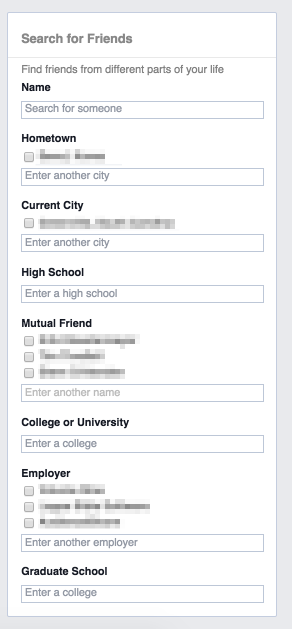
Facebook’s innocuous search bar can turn into a powerful social search. An advanced search can produce surprisingly focused results. I can even find friends who aren’t my friends.

facebook-advanced-friend-search

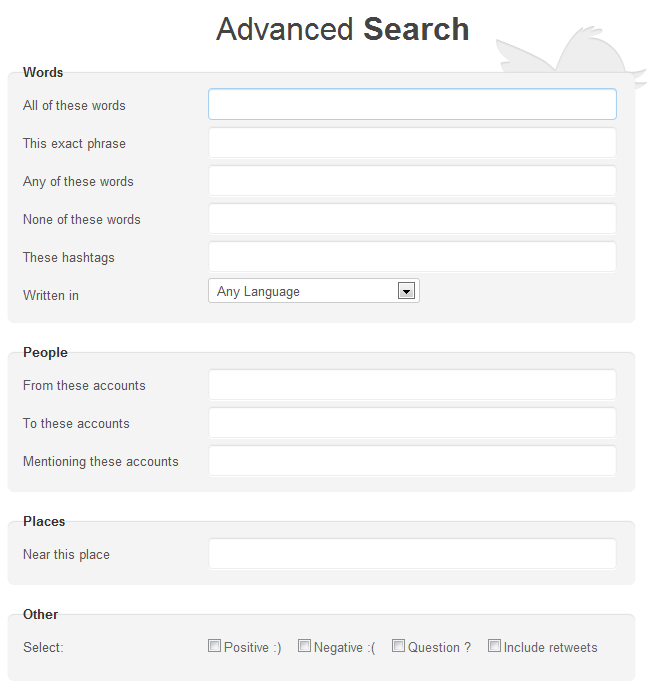
Twitter’s own advanced search provides even more flexibility. Twitter search can produce results with positive emotion, negative emotion, or questions.

twitter-advanced-search

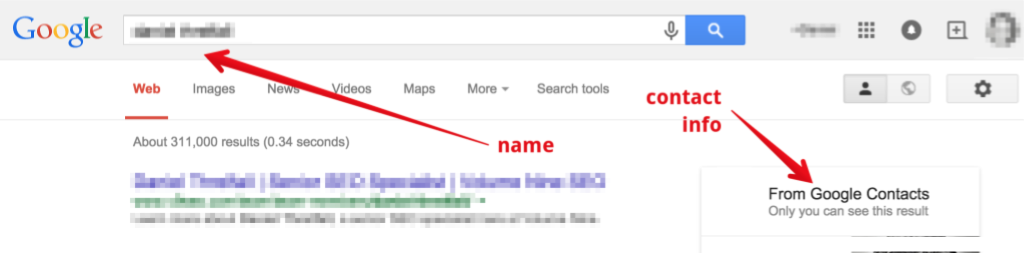
For Google users who are logged in, Google already returns Google+ results, which includes detailed contact information on users.

When I search for the name of someone in my Google+ circles, I get proprietary results drawn directly from my personal network.

google-circles-search

With Google and Twitter’s tighter relationship, we can now expect the existing search power of Google applied to Twitter in new and surprising ways.

Social media professionals should understand how search works, both from a social perspective and from a search engine perspective. Having an understanding of search will enable social media strategists to further advance the findability of their brands and specific social media campaigns.

Digital marketing professionals have long struggled with identity crisis, trying to determine how broad or deep they should be. Those who prefer specialized roles tend to clash with those who are digital marketing jack-of-all-trades. SEOs are told that they aren’t actually SEOs, and marketers and agencies alike are trying to shape up into a T.

Whether you’re a search professional or a social professional, you should realize that the boundaries between the two are blurred. Search professionals should understand how social affects their role. Social professionals should realize the impact of search upon their role.

Both must acknowledge that the lines of the playing field are being redrawn in new and startling ways.

2. Employ an ongoing social strategy

Admittedly, this is a broad application, but it’s one that I must insist on.

Twitter and Google’s partnership sends a clarion call to the digital marketing world: Social matters. Big time.

Brands — from enormous companies to individual personalities — must have a social presence. But social presence isn’t enough.

It’s now necessary to have an ongoing methodology for advancing a social media agenda.

In the early days of the web, a business thought that it was doing a good job simply by having a website. Websites were digital placeholders.

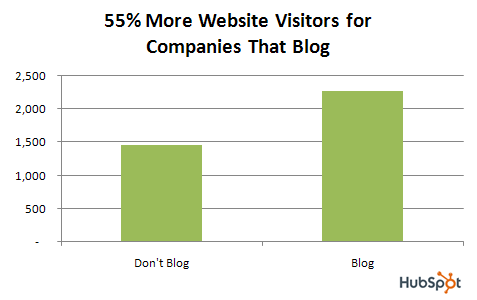
Then around 2009 we realized that brands needed to produce content on a regular basis! The blog boom was born.

benefits-of-blogging-for-companies-traffic

Source

Greater indexation, more pages, more visitors, more leads, more revenue — good things came to those who blogged.

We’re in a similar situation with social. A company that lacks a consistent output of social content isn’t going to last in the world of social.

As Google and Twitter merge their vast user bases and algorithmic technology, we’re going to see the importance of real time social search results.

Let me be very clear: Tweet regularly. Tweet often. Tweet a lot.

Keep your social output consistent and regular. Presumably, the better your posting velocity, the more likely you are to gain the right kind of attention and traffic.

3. Learn hashtag strategy, and use hashtags regularly

Hashtags will become more important than ever.

It’s likely that hashtags will help to drive search queries and Google’s search results. This is, admittedly, conjecture, but it seems likely that if tweets are part of the search results, then hashtagged terms within those tweets will also be searchable and visible.

It’s not a leap of logic to assume that any hashtagged queries will also produce additional Google results.

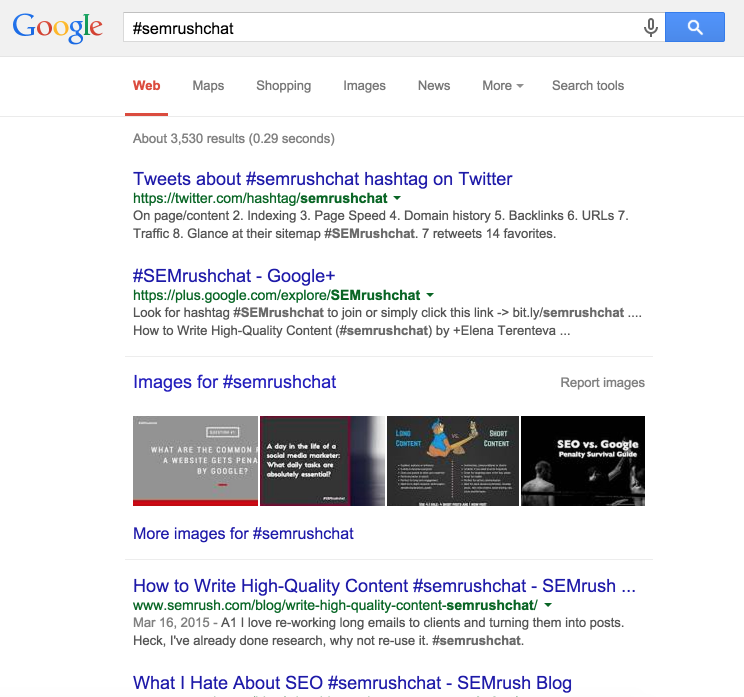
How can we be so sure? For one, Google already does this. Hashtagged queries get social results:
semrush-hashtag-google-search-results

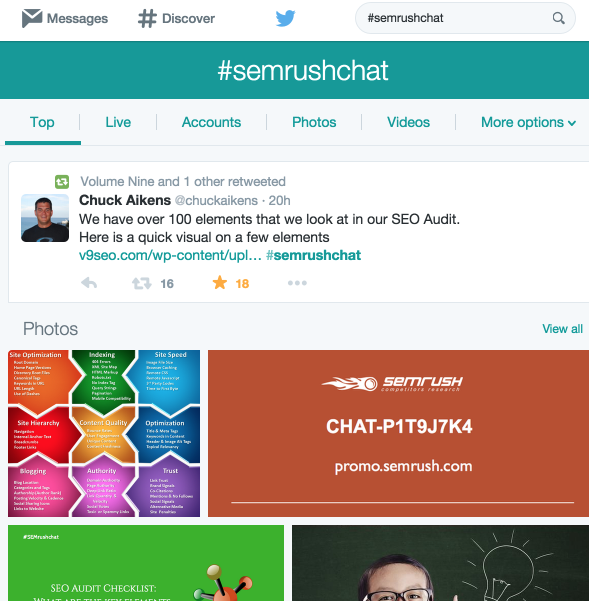
The top result for #semrushchat is a Twitter page with that hashtag. SEMRush hosts Twitter chats, so the hashtag #semrushchat has plenty of action, images, and updates.

semrush-hashtag-twitter-results

Hashtags are the new keywords — not just for social activity, but search activity, too.

Since all the major social platforms use hashtags, Google search has been forced to adapt.

Now, your brand must adapt, too. Creating unique hashtags and capitalizing on the use of those hashtags will put you in a strong position to gain additional visibility and exposure s Google rolls out the application of their Twitter partnership.

For a quick visual summary of hashtags, check out this hashtag infographic.

4. Participate in trending topics

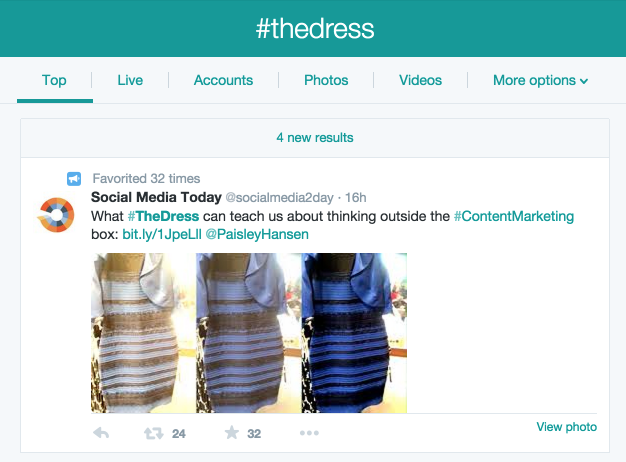
Twitter loves its Trends.

Users love it, too. Twitter trends are a way to discover what’s hot on Twitter. Trends can easily explode into worldwide sensations.

the-dress-twitter-trending

As Google jumps into the game, Trends will become even more significant in their real time search application.

Google can ascertain what topics are trending, but not with the same instantaneous algorithmically-powered accuracy that Twitter has.

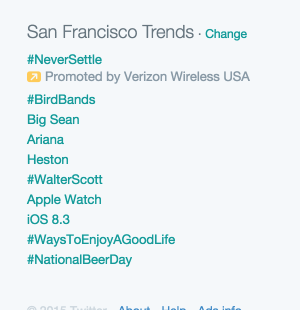
A Googled trending hashtag can’t compete with Twitter’s live stream.

twitter-san-francisco-trends

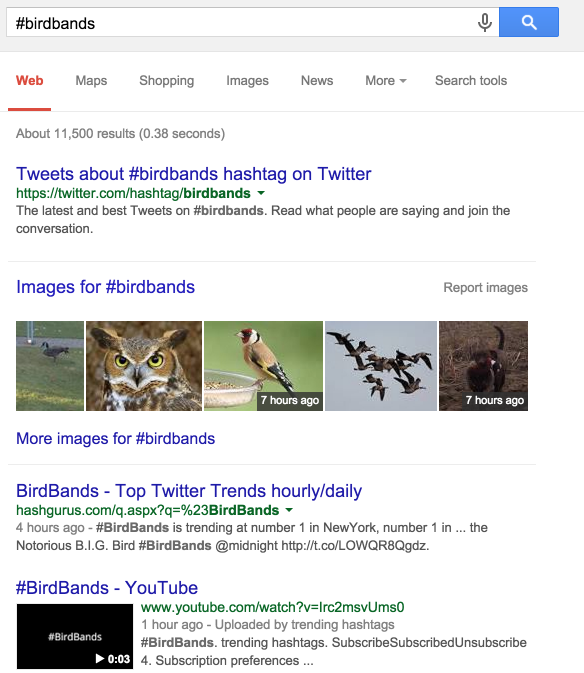
A Google query for #birdbands will give you this…

hastag-bird-bands-google-results

You get the idea that #birdbands is trending, but you don’t know why — not at a glance anyway.

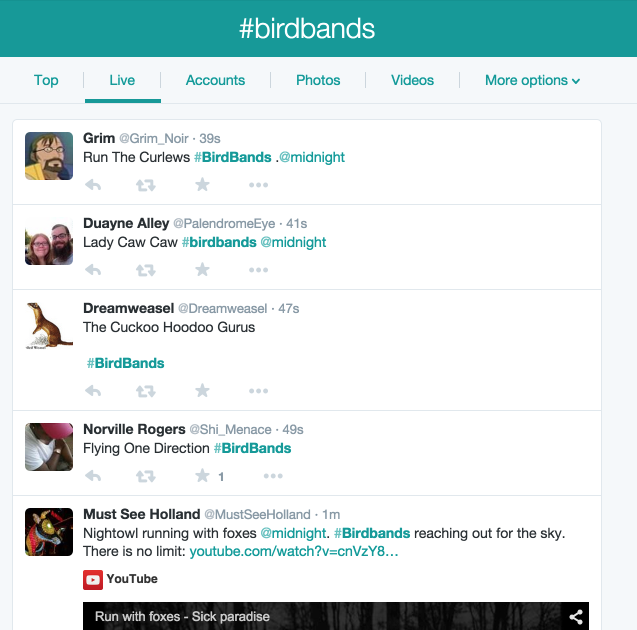
Twitter’s live stream, however, shows you this…

birdbands-twitter-hashtag-live-stream

Searching on Google means that you won’t get the joke at first. Searching on Twitter gives you complete understanding.

As Twitter and Google cozy up, Trends will be bigger and better than before. Twitter’s recent mobile changes mean that trends are more apparent and easier to find. As Google brings these trends into search visibility, we can expect it to improve even more.

5. Measure, track, and adapt

It will be interesting to see how the Google and Twitter partnership will affect the impact and ROI of social media.

In light of the coming change, keep close tabs on your social media record keeping. Be sure to align your social media efforts with your company goals. To this end, it will be helpful to inform your company’s search marketing team of the efforts.

Conclusion

My final recommendation is perhaps the most significant, but also the most obvious.

Keep using Twitter. If Twitter is partnering with the king of search, there is no way that the 14-character social media platform is on the decline.

This is the perfect opportunity to beef up your Twitter profiles, ramp up your tweet velocity, and strengthen your strategy.

Search and social are finally getting together, and it can only mean good things for social media marketing.

What do you think will be the biggest impact of the Google/Twitter partnership?
About the Author: is a lifelong evangelist of Kissmetrics and blogs at Quick Sprout.